




Discover the most important works
Discover the most important works from the collection of the National Museum in Krakow. Discover their fascinating history.

You can buy tickets for exhibitions and events online
Ticket prices:
Reservations are accepted by the Information and Reservation Center
tel. +48 12 433 57 44
e-mail: rezerwacja@mnk.pl
Monday: closed
Tuesday: 10.00 AM – 6.00 PM
Wednesday-Sunday: 10:00 AM – 4:00 PM
Last visitors are admitted to the gallery and exhibition no later than 20 minutes before closing time. The ticket office, gift shop, and cloakroom are open until closing time.
The garden is open daily: Monday to Thursday from 10.00 am to 9.00 pm, and Friday to Sunday from 10.00 am to 10.00 pm. Admission is free.
Public transport access
Facilities available at MNK Mehoffer: audio description, sensory basket, café, garden, shop, cloakroom.
The building is not adapted to the needs of people with mobility impairments, but it is possible to access the ground floor (by climbing a few steps), where the parlour and gift shop are located, as well as the garden (via a ramp). No toilet available.
Discover the most important works from the collection of the National Museum in Krakow. Discover their fascinating history.
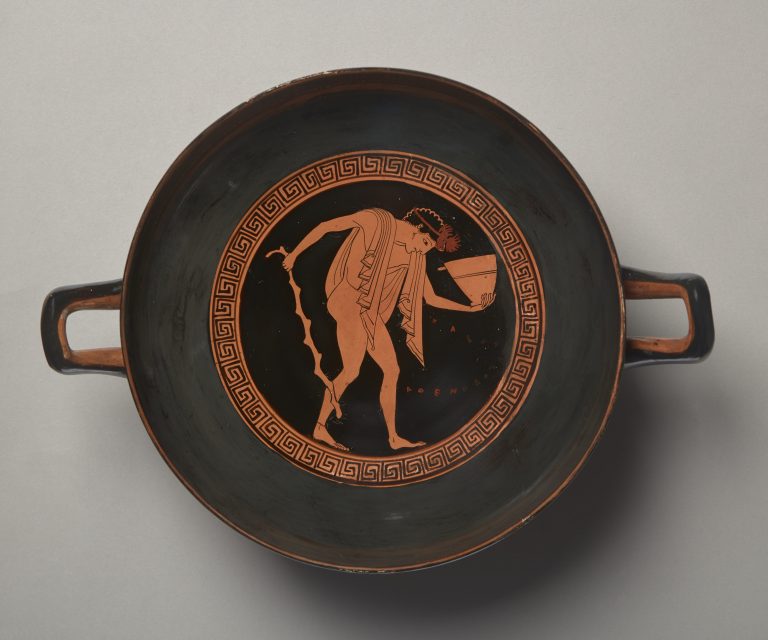
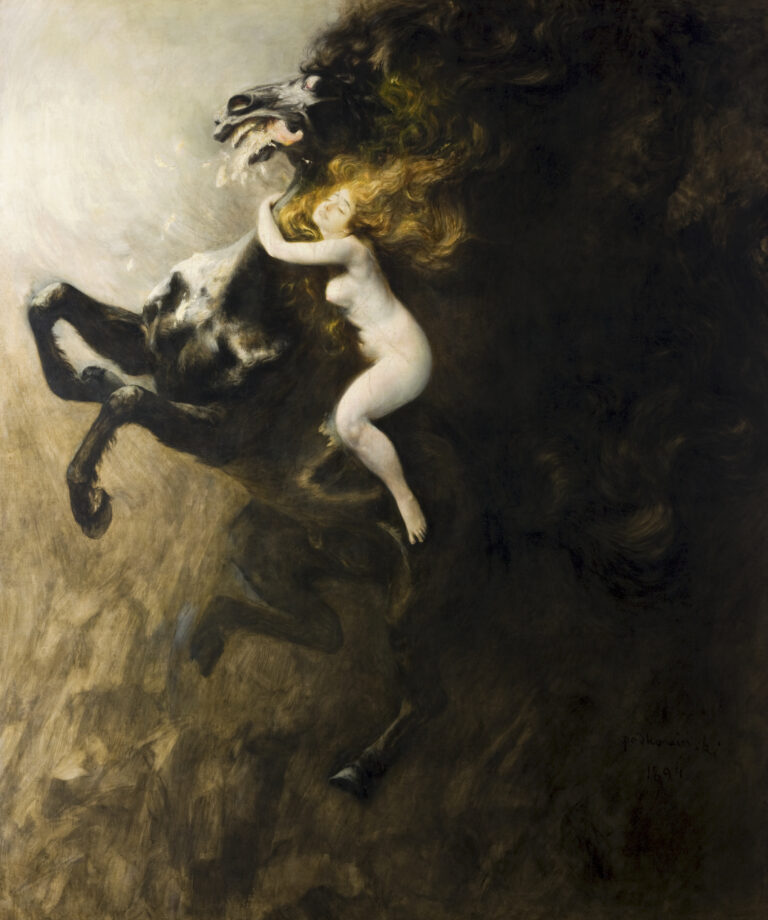
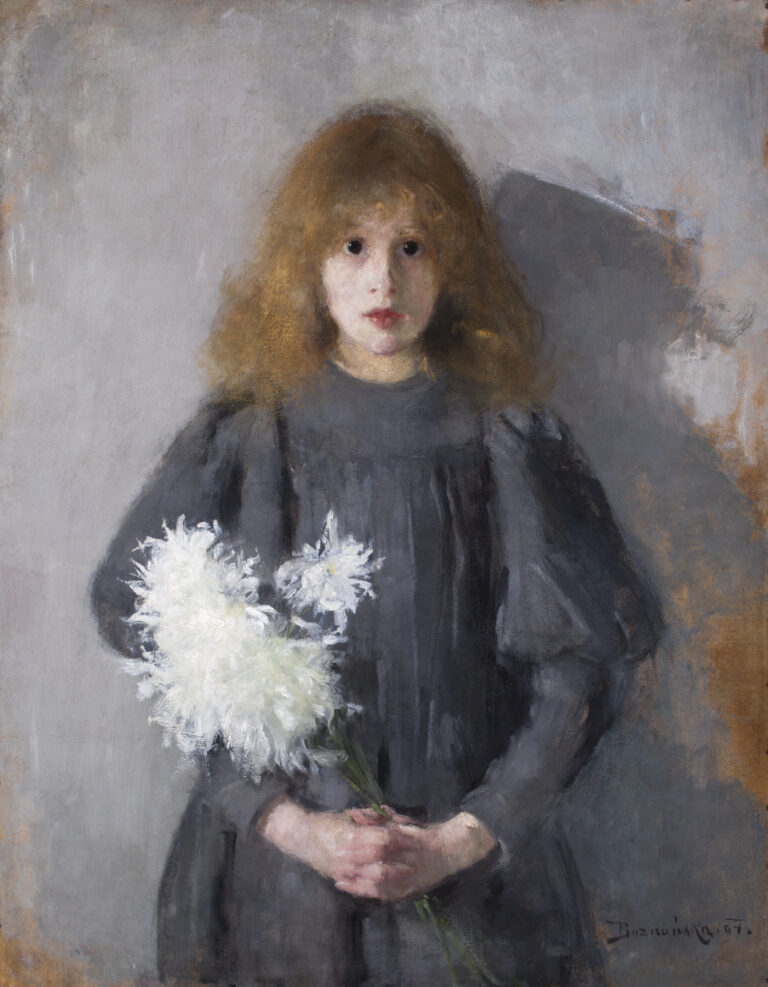
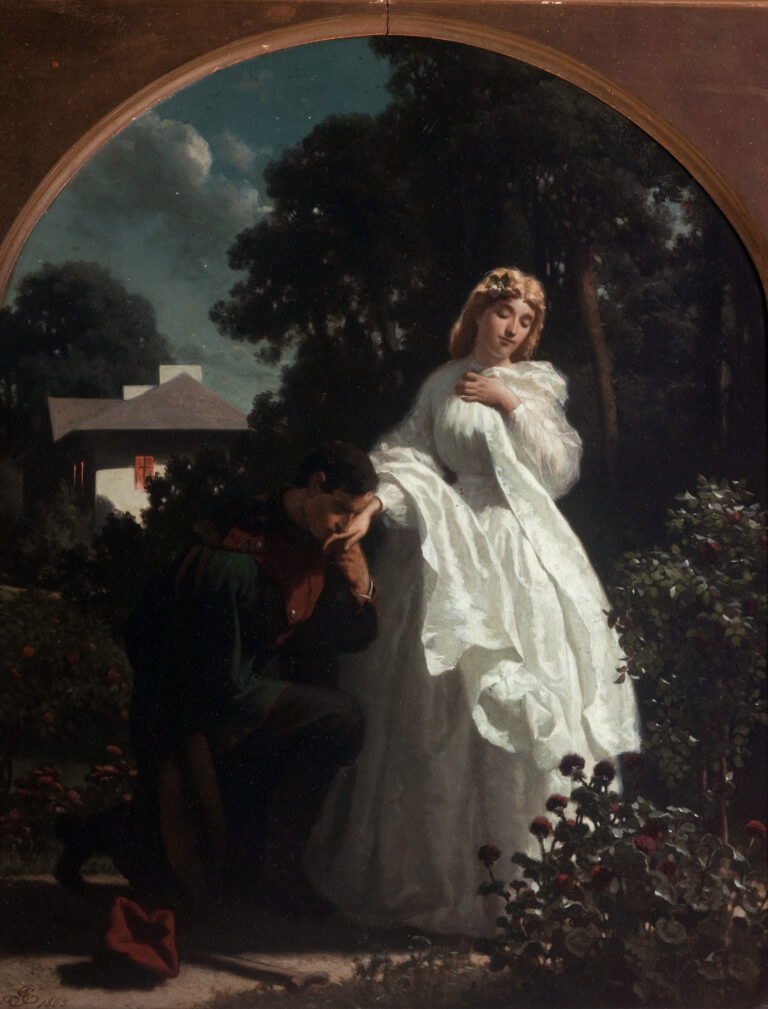
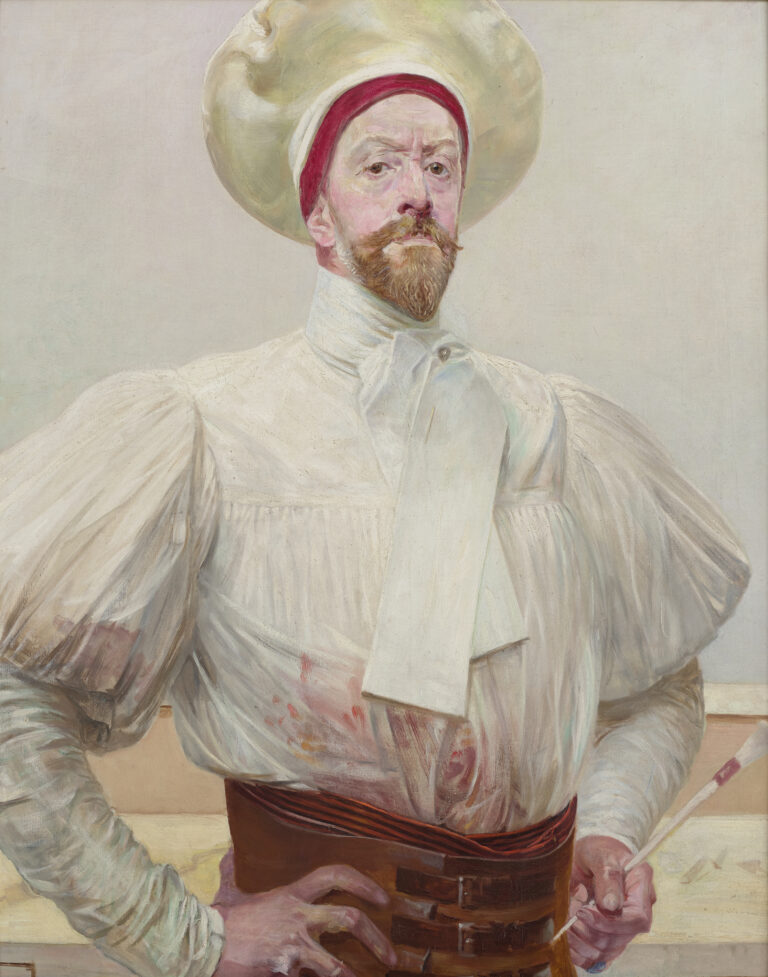
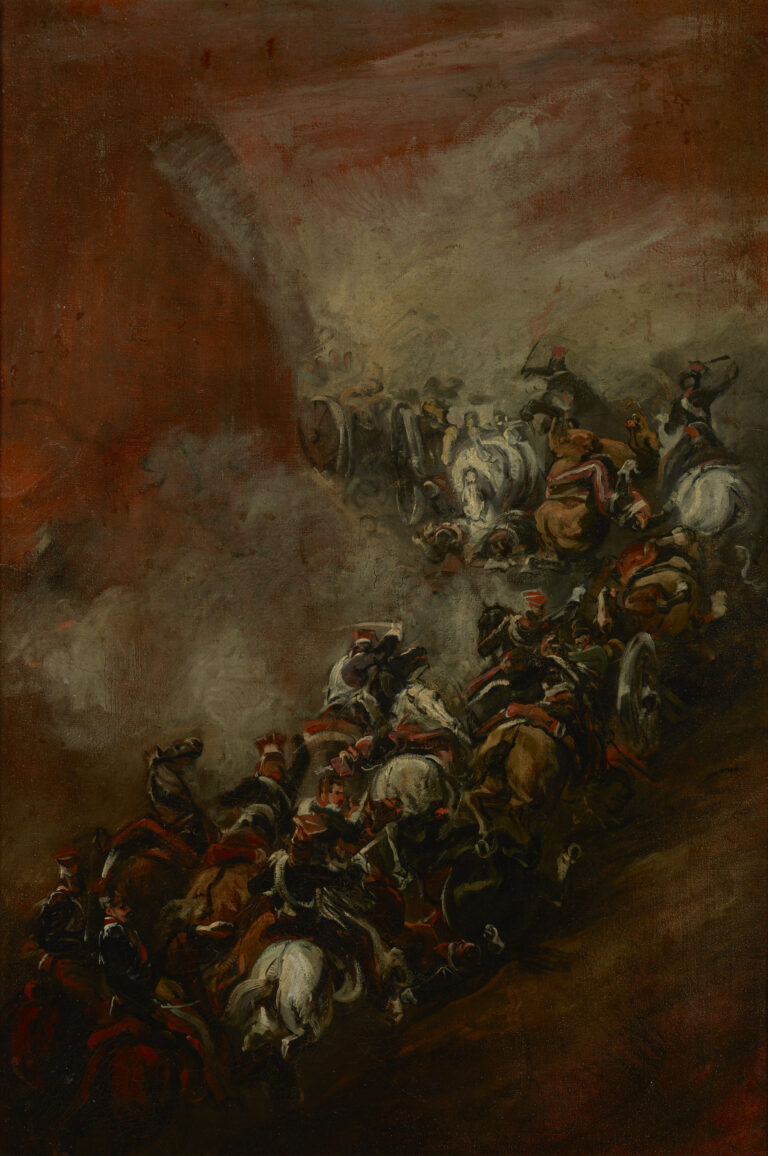
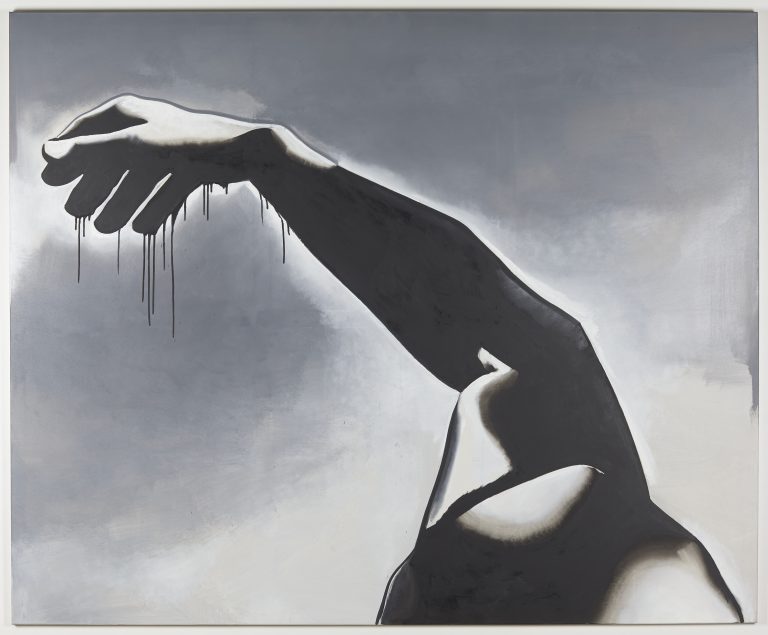
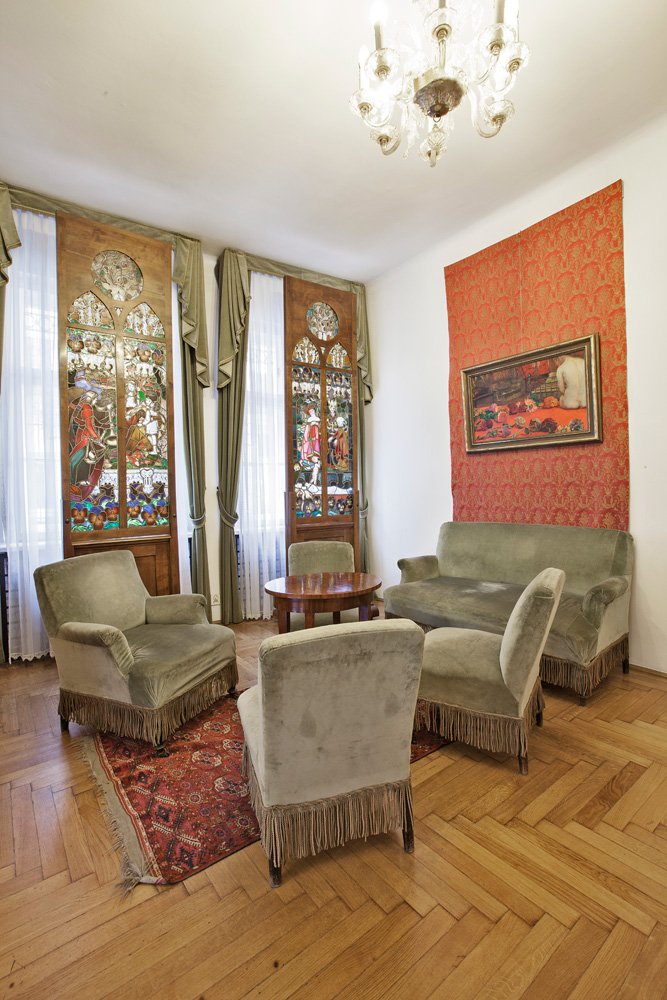
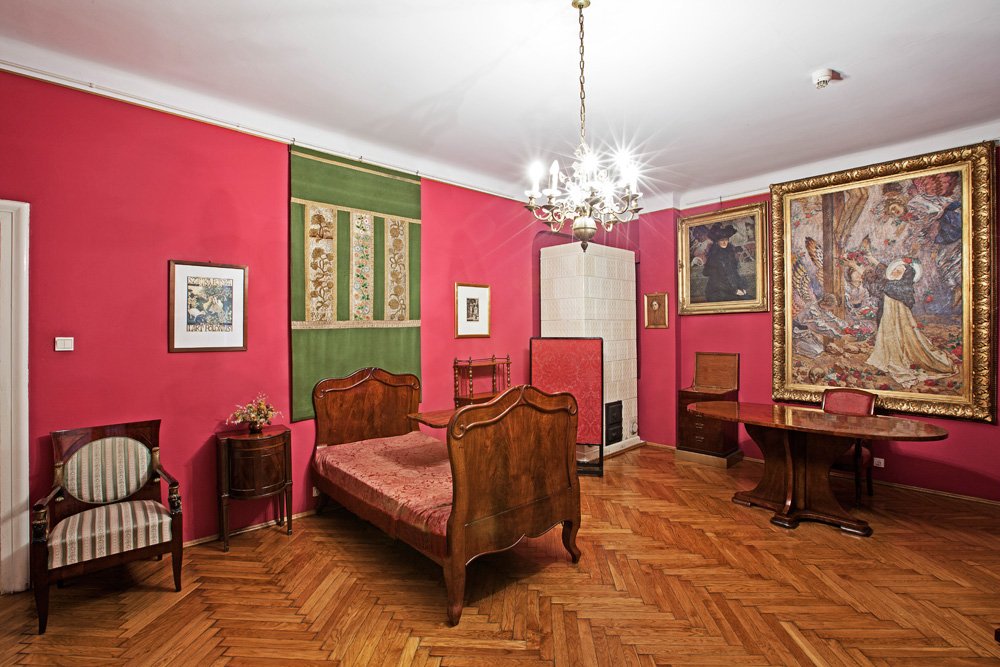
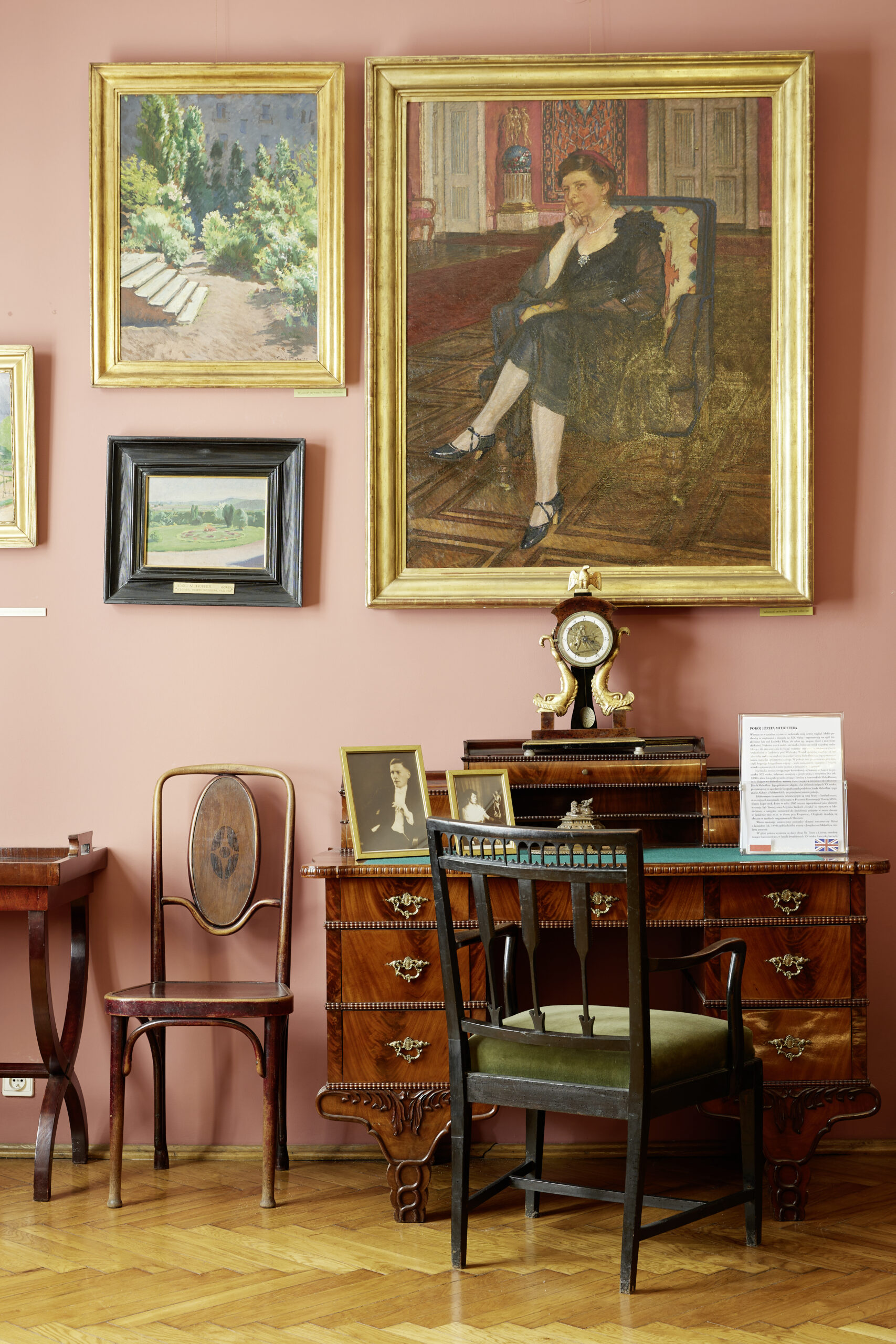
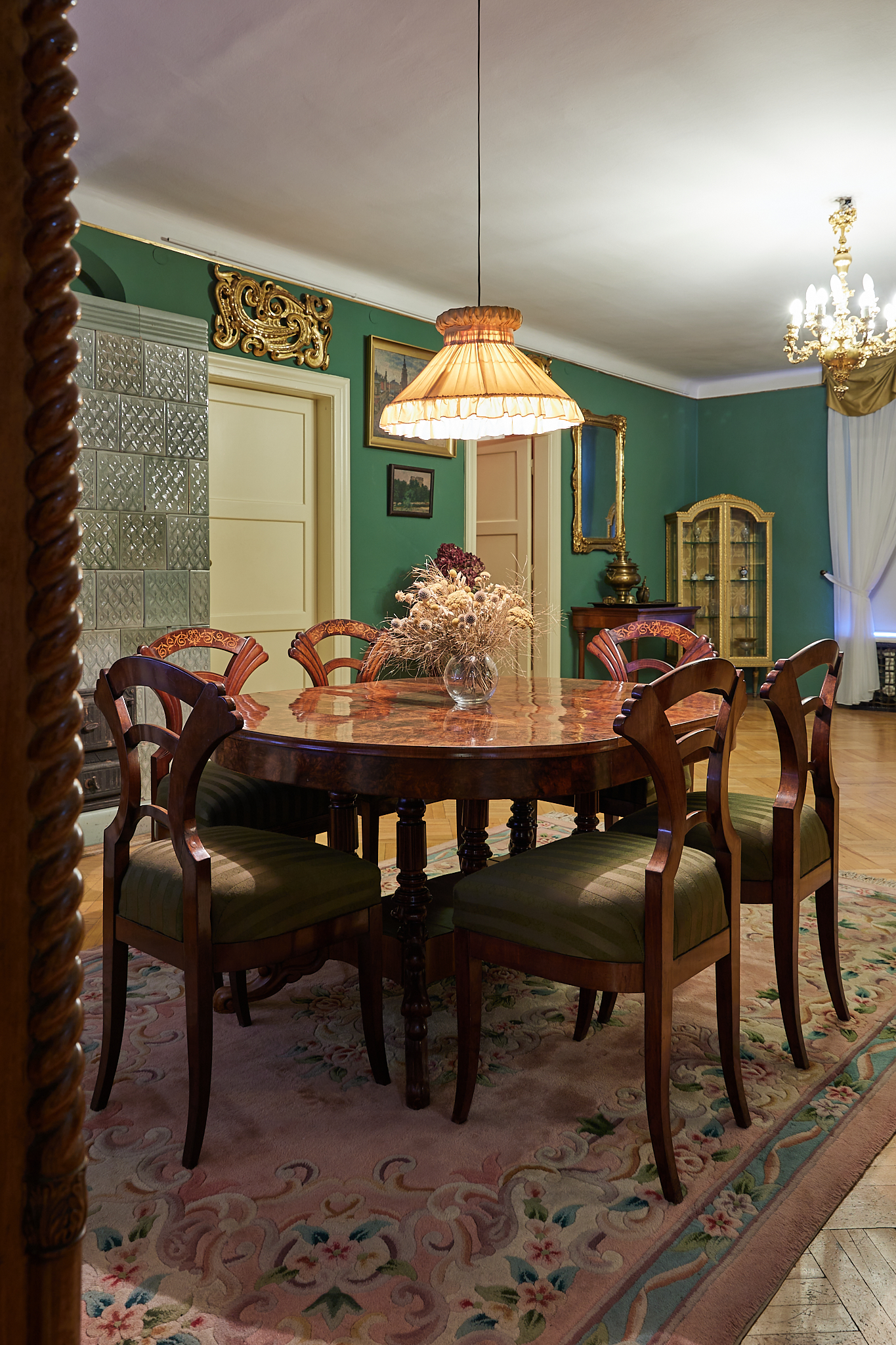
MNK Mehoffer’s house, known as the ‘Palace under the Pine Cones’, is located at 26 Krupnicza Street and is an artist’s house-museum, preserved with a wealth of authentic furnishings. Inside, amidst historic furniture, works of artistic craftsmanship, photographs and family memorabilia, the works of Józef MNK Mehoffer are on display – a pupil of Jan Matejko, a contemporary of Stanisław MNK Wyspiański and one of the most outstanding artists of Young Poland, who was also active during the interwar period.
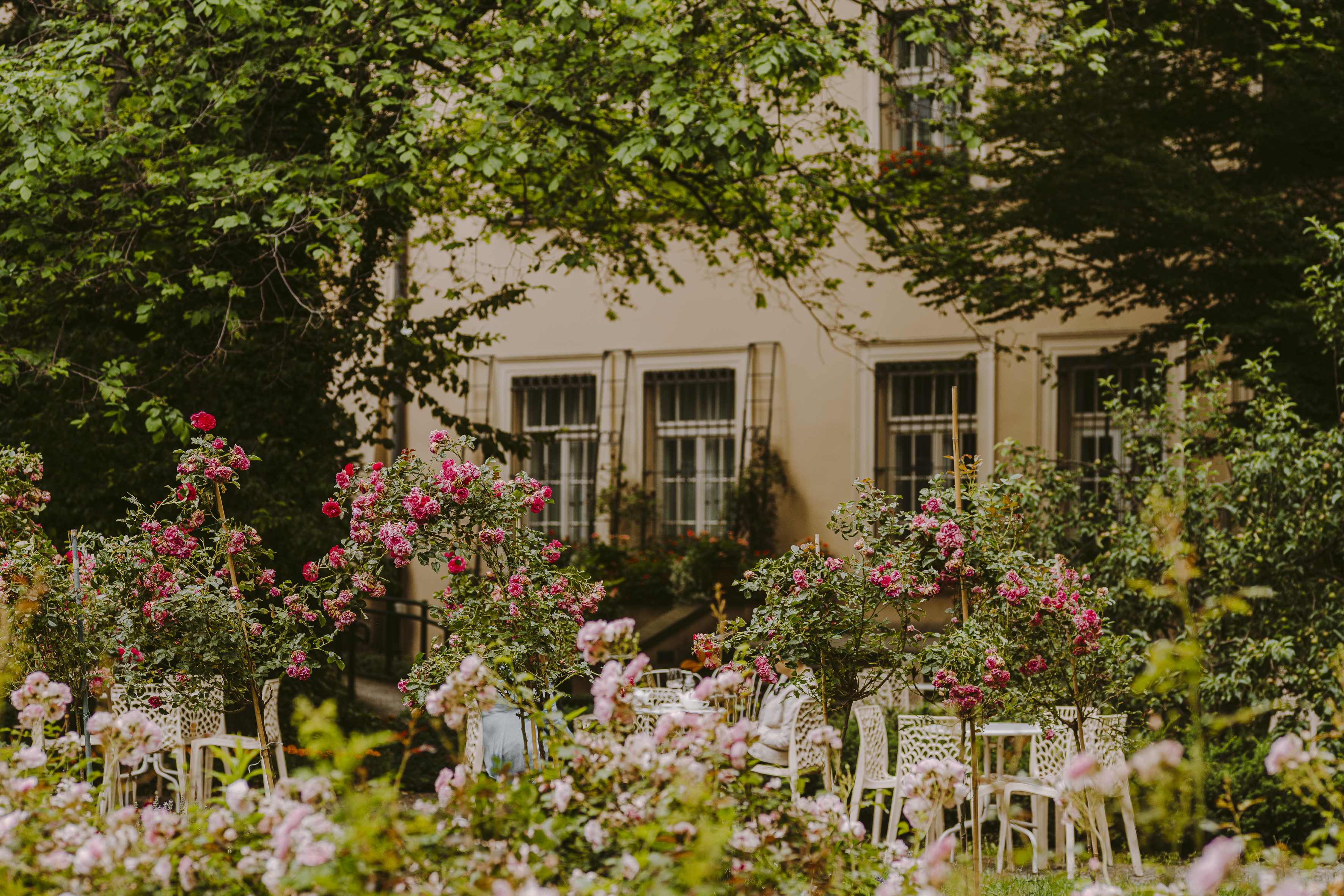
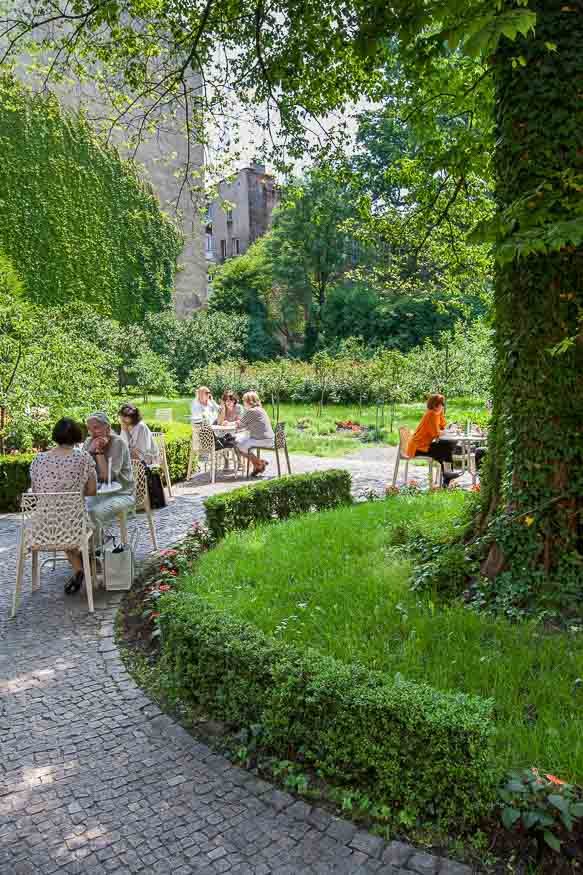
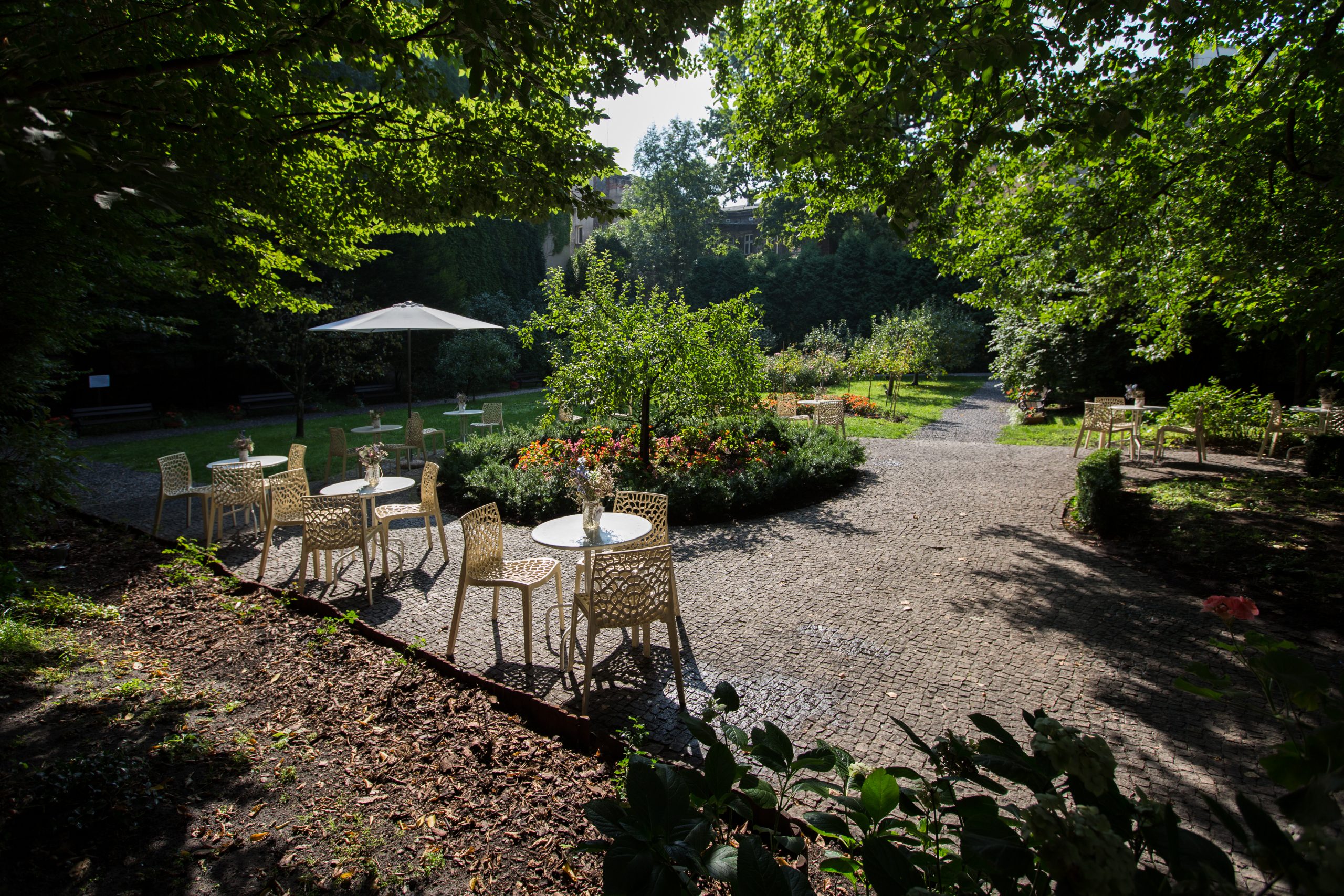
A noteworthy part of the branch is MNK Mehoffer’s Garden, recreated partly on the basis of the artist’s paintings. It serves as a natural extension of the exhibition and is also one of the most beautiful, green and secluded spots in Kraków.
The MNK Mehoffer House is situated in the former home of the painter at 26 Krupnicza Street, which is listed in the Register of Monuments. A garden extends to the south of the building.
Built as a single-storey brick building on the site of a wooden manor house destroyed by fire in 1850, it owes its present form to a reconstruction carried out between 1873 and 1874. It is a street-front building, single-storey, with a through hallway and a short wing to the right, extended by an outbuilding and farm buildings running deep into the plot along its western boundary. Viewed from the garden, the building’s spacious skylight in the stairwell catches the eye. The front façade is an 8-axis, Classicist structure. During conservation work in 1984, at the request of the painter’s son, the MNK Mehoffer coat of arms, carved from sandstone, was placed in the lintel of the gate.
Józef MNK Mehoffer (1869–1946) purchased the house on Krupnicza Street in 1932, captivated by its old-fashioned appearance and the spaciousness of the courtyard and garden, shaded by the greenery of old trees. The house already had its place in the city’s history at that time.
During the January Uprising, it became known as a centre for underground activities. At that time, it belonged to the merchant Mateusz Rogowski (1801–1868).
It was here that the sculptor Franciszek Wyspiański rented a studio; he eventually married one of the Rogowski sisters, Maria, and it was here that the future creator of ‘The Wedding’ was born on 15 January 1869.
Purchased in 1872 by Joanna Józefowa Szujska and rebuilt, the house took on the character of a mansion, befitting the high social standing of its owners. Józef Szujski (1835–1882), an eminent historian, professor and rector of the Jagiellonian University, a member of the National Sejm in Lviv and a member of the Austrian House of Lords, was indeed one of the leading figures in Galicia at the time. Between 1894 and 1932, the house fell into disrepair, as successive owners let it out, including for use as craft workshops.
MNK Mehoffer carried out a complete renovation of the house. He left the building’s structure unchanged but introduced a new interior layout, giving the whole property the character of a carefully arranged family home, which among his closest circle came to be known as the ‘Palace under the Pine Cones’. The outbreak of war in 1939 interrupted the finishing works. Upon their return from the German camp at Ash in the Sudetes, the MNK Mehoffers – despite the hardship and terror of the occupation – continued the tradition of musical and literary salons in their home. It was here, too, that the painter worked, having lost access to his studio in the Academy of Fine Arts building on MNK Matejko Square.
After his death, his family remained in the house, which was filled with works of art, archives and mementoes. Zbigniew Mehoffer (1900–1985), the painter’s son, had already begun efforts in 1963 to establish a MNK Mehoffer museum on Krupnicza Street, a project that was only realised years later. In 1986, in accordance with the artist’s family’s wishes, the house and its plot became the property of the State Treasury and were transferred to the National Museum in Kraków to serve as a branch dedicated to this artist. Following further renovations and refurbishment work, it was opened to the public in 1996.
Compiled by: Anna Zeńczak – art historian, retired curator of the National Museum in Kraków. She specialises in art from the turn of the 19th and 20th centuries. Author of studies on the work of Józef Mehoffer.
An important step towards safeguarding the MNK Mehoffer collection was the National Museum in Kraków’s purchase in December 2023 of 17 boxes of Józef Mehoffer’s designs for the stained-glass windows in St Nicholas’ Church in Freiburg – a complete set of designs created by the artist between 1895 and 1936, constituting his life’s work. Large-format works by Józef Mehoffer can be viewed in the 20th and 21st Century Gallery at the MNK Main Building.
MNK Mehoffer’s Garden serves as a kind of extension of the exhibition and, just as in the past, contributes to the charm of the house. It is linked to the tradition of this part of Kraków, situated outside the former city walls, where mills and craft workshops, as well as suburban gardens—which were gradually built over over time—had been established for centuries along the branches of the Rudawa River that once flowed here.
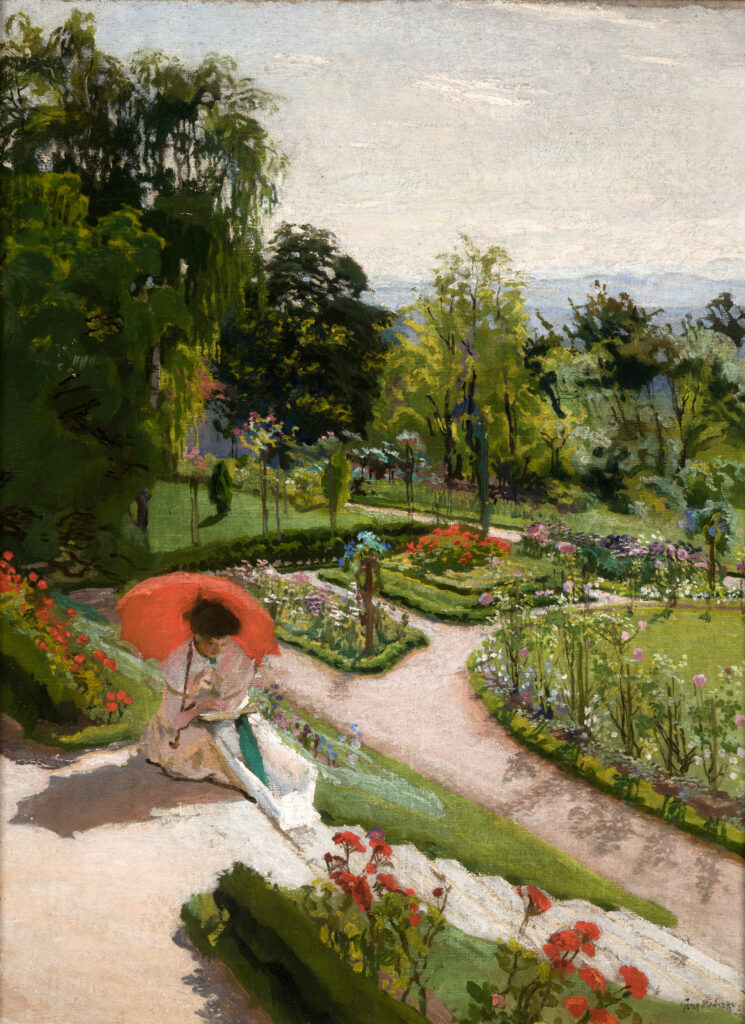
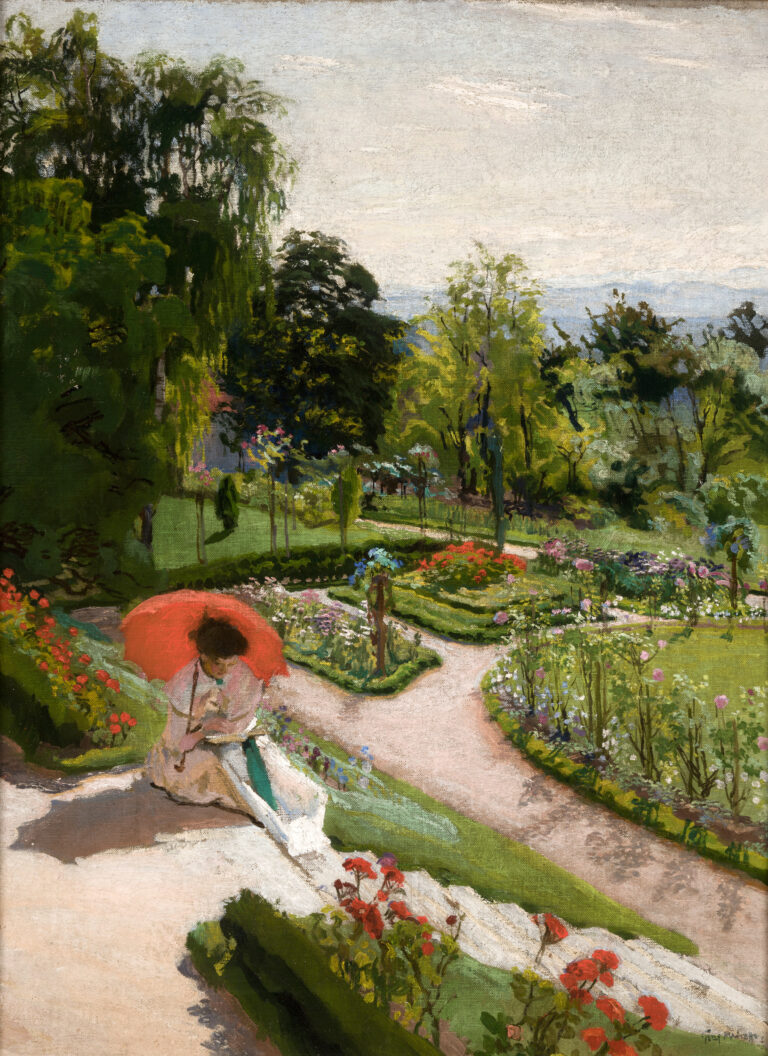
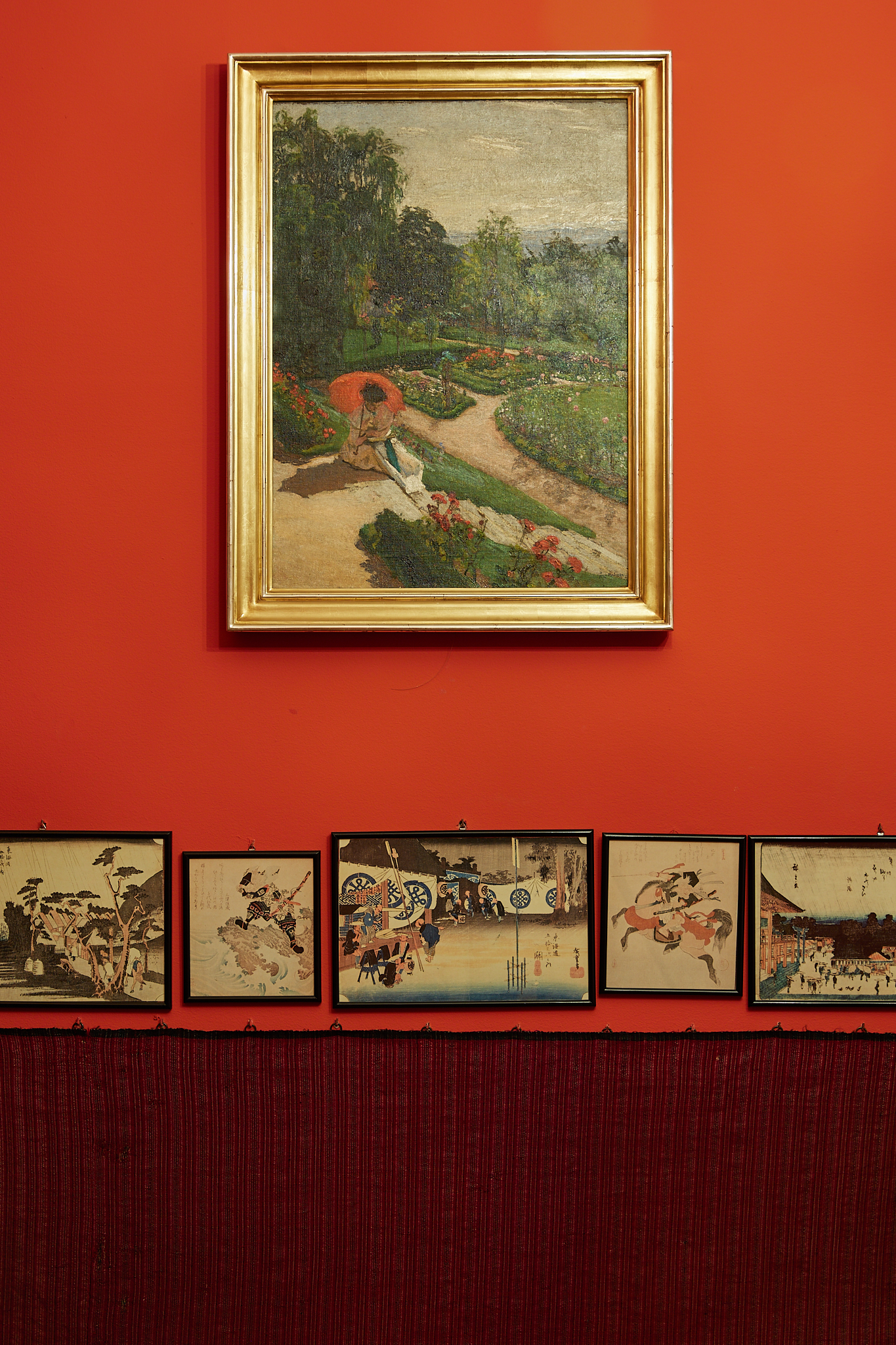
Having purchased the property in 1932, the painter redesigned its layout. This was already the second garden he had designed for himself. The first of these – on the slope of a hill near the MNK Mehoffer estate in Jankówka near Kraków, commemorated by the painting ‘The Red Parasol’ – was established in 1907. This time, a much smaller garden was created, situated in the vicinity of tall tenement houses. During the earthworks, numerous fragments of old decorative tiles were unearthed, some dating back to the Renaissance period, as well as stone elements originating from MNK Wyspiański’s studio.
MNK Mehoffer planned the central part of the garden as a vast lawn open towards the house, framed on three sides by rows of fruit trees. A sand-covered path ran beneath their shade. A flowerbed and borders were laid out on the lawn, with a vegetable patch further back. There was no shortage of ornamental shrubs either. A row of slender poplars separated the property from the courtyard of the tenement house at 11 Krupnicza Street, whilst its blank walls were covered with climbing vines. The garden was accessible from the house via the courtyard or directly via the terrace. It often provided the artist with subjects for his paintings. After the war, over the years, it became overgrown, covered with random plantings and self-sown trees.
In 2003, it was restored by the National Museum in Kraków on the basis of iconography and field research, taking into account the preserved old trees (a huge elm, poplars). Thus, much like in MNK Mehoffer’s time, both the overall layout and the selection of plants are now as they were then: fruit trees, ornamental shrubs and selected species of flowers have been planted. A distinctive feature is, for example, the flowerbed with a circle of climbing roses and a rose in the centre, known from MNK Mehoffer’s painting from the occupation years, ‘The Garden on Krupnicza Street’. The needs of the current users were also taken into account. For instance, with the large number of visitors in mind, the small square beneath the elm tree opposite the steps has been significantly enlarged, and a ramp for pushchairs has been built.
The garden was opened to the public on 20 May 2004. The design was created by Dr Zofia Malinowska, a specialist in the restoration and renovation of historic gardens, whilst the work was carried out by Jacek Ginda’s Kraków-based firm.
For the restoration and opening to the public of Józef MNK Mehoffer’s former garden, the Museum received the Prof. Janusz Bogdanowski Award, granted in recognition of “care for Kraków’s public spaces”, and the Minister of Culture and National Heritage’s “Sybilla 2004” Award.
The garden is open daily from spring to autumn, whilst in winter – depending on weather conditions. The garden also features a charming café, which is the perfect place to relax and meet up amidst the greenery. Concerts, children’s workshops and special events, such as ‘Museum Night’, are held here.
Compiled by: Anna Zeńczak – art historian, retired curator of the National Museum in Kraków. She specialises in art from the turn of the 19th and 20th centuries. Author of studies on the work of Józef Mehoffer.
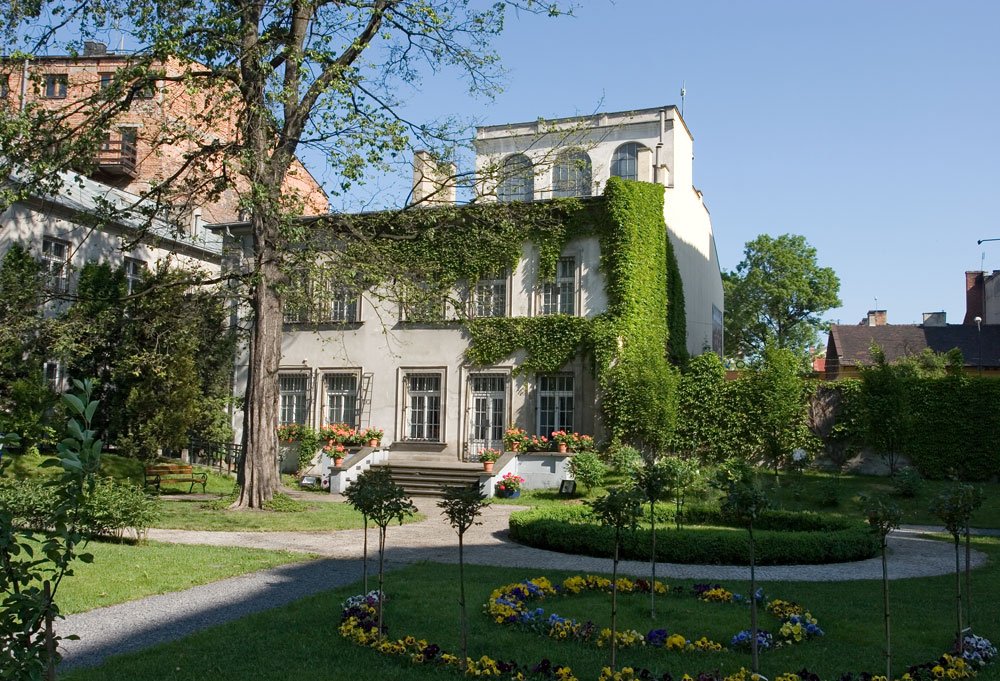

ul. Krupnicza 26, 31-123 Kraków























Discover our suggestions for exploring the museum’s branches. See the most important works in a single day, discover the lives of the greatest artists, or discover unusual works from bygone eras.

Łączyła ich więź przyjaźni, wspólnej pracy i rywalizacji; obaj studiowali razem w Paryżu oraz wynajmowali mieszkanie. Ścieżka poprowadzi przez świat krakowskiego modernizmu, ukazując twórczość dwóch najwybitniejszych artystów Młodej Polski – Józefa Mehoffera i Stanisława Wyspiańskiego.



Ścieżka zwiedzania prowadzi przez trzy oddziały Muzeum Narodowego w Krakowie – Pałacu Książąt Czartoryskich, Arsenału oraz Domu Jana Matejki – ukazując, w jaki sposób sztuka przez stulecia budowała obraz państwa i pamięci narodowej.

He was a painter, graphic artist and designer; he explored new avenues in literature and experimented in theatre. You’ll find traces of Stanisław Wyspiański all over Kraków, as the artist had a direct influence on the way we see the city.



 See directions