


 MNK Main Building
al. 3 Maja 1, 30-062 Kraków
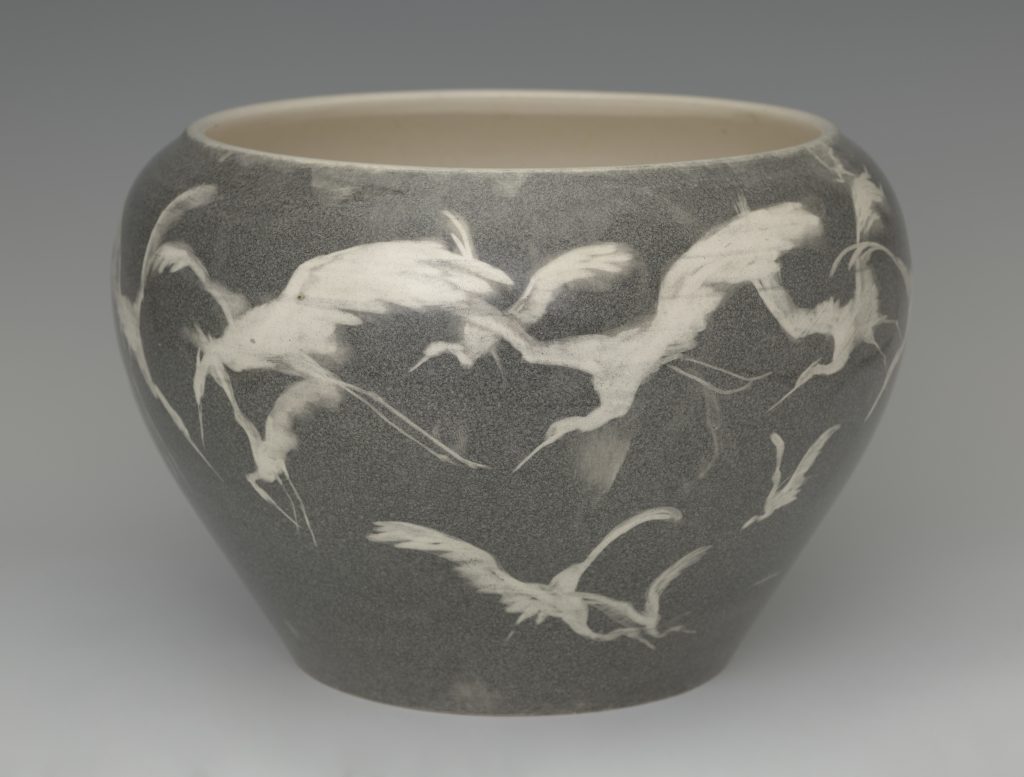
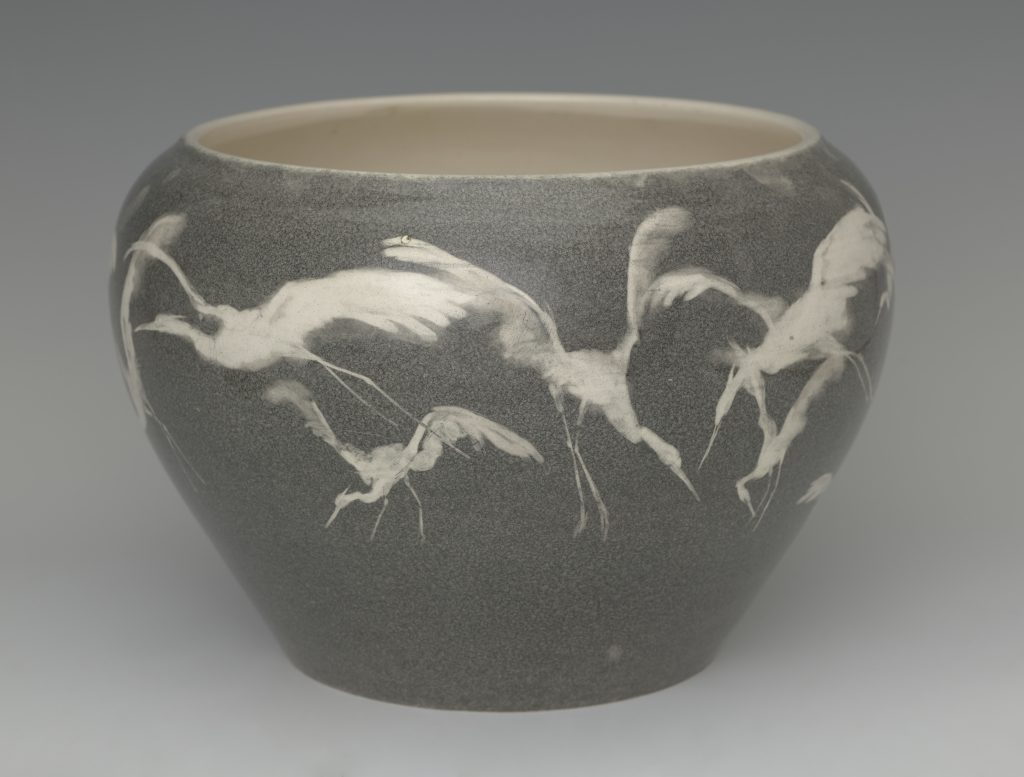
This exceptionally elegant, subtly painted vase was donated to the collections of the National Museum in Krakow in 1921 by Erazm Barącz—a mining engineer, head of the Wieliczka salt mines, and a distinguished collector and benefactor of the National Museum. It is decorated with a frieze of flying cranes emerging from a gray background. In Japanese culture, the crane has been a symbol of longevity and happy relationships for centuries; both the motif itself and the way it is rendered make this vase—produced at the J. Niedźwiecki & Co. factory in Dębniki, Krakow—one of the finest examples of the influence of Japanese art on Polish decorative arts.
The vase was designed by Tadeusz Rychter (1870–1943), a painter, graphic artist, and designer across various fields of artistic craft. The artist was a friend of Jan Szczepkowski and even posed for the nude figure that the sculptor placed on his own vase featuring a procession of naked figures, also produced at the Dębniki factory. While Szczepkowski’s vase can be found in numerous collections, including that of the National Museum in Krakow, Rychter’s vase is a unique, one-of-a-kind object.
We invite you to explore more about this object in the digital catalogue of the National Museum in Kraków. Author of the entry: Bożena Kostuch
MNK Main Building
al. 3 Maja 1, 30-062 Kraków