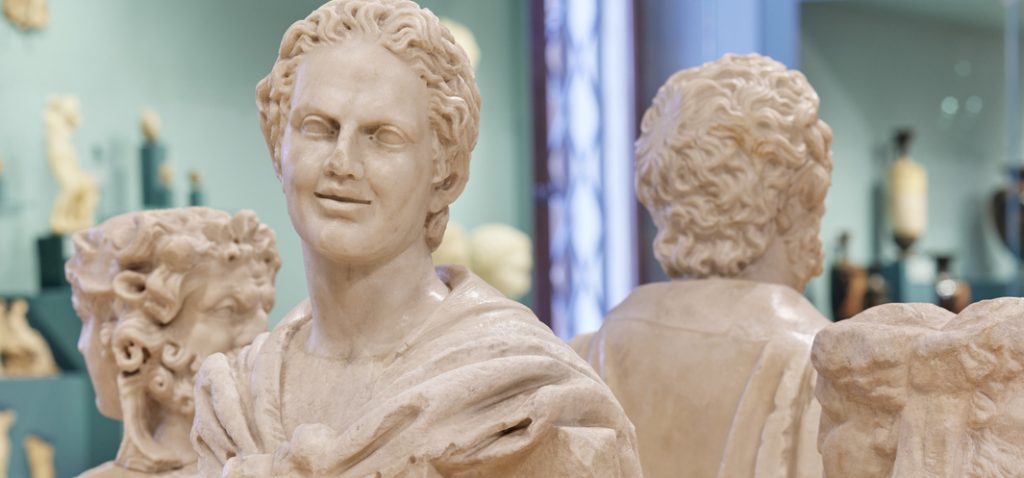
The Sculpture Conservation Workshop specialises in the restoration of objects made from traditional sculptural materials, such as stone, plaster, terracotta, clay, as well as works of contemporary art, in which, alongside traditional materials, a whole range of unusual materials – not previously regarded as sculptural materials – are used and combined.
The Studio’s interests centre, amongst other things, on the issue of the conservation of synthetic materials, which is a relatively new field. The mechanisms underlying the changes occurring in these materials are not yet fully understood; these processes are irreversible, which is why prevention is a crucial element of conservation work – creating suitable storage conditions for the objects, which can significantly slow down the processes of degradation.
Among the plastic objects in the collection of the National Museum in Kraków, the most valuable and best-known are the works of Alina Szapocznikow. The museum possesses a vast and exceptionally valuable collection of works by this outstanding artist. Among these, a special place is occupied by over a dozen compositions made from synthetic resins (the ‘Herbarium’ series, the full-figure ‘Piotr’ and ‘Alina’s Funeral’), which have undergone conservation work at the Sculpture Conservation Workshop.
In recent years, these works have been presented in a series of enthusiastically received exhibitions at leading cultural centres in Europe and the United States, including WIELS in Brussels and MoMA in New York.
In the works of contemporary artists, we encounter many complex conservation challenges arising from the unconventional, often impermanent techniques used in their creation. Each object requires an individual approach and, on many occasions, the application of innovative solutions.
Among the Sculpture Conservation Studio’s most interesting projects is the complex conservation of Barbara Zbrożyna’s large-scale work entitled ‘The Sun’. It is one of the most outstanding works of Polish sculpture from the post-war period. The bas-relief, in the form of a circle with a diameter of approx. 210 cm and a thickness ranging from a few to over ten centimetres, was mounted on a wooden truss. Due to faulty construction techniques, the structure had become destabilised and wobbly, resulting in structural cracks in the cast. The primary conservation challenges were therefore the design and construction of a new supporting structure and the development of a mounting system for the purposes of future display.
A major, long-term project undertaken by the Studio was the conservation of over seven hundred historic plaster casts for the exhibition ‘Kraków at Your Fingertips’. This extremely interesting collection was created at the turn of the 19th and 20th centuries. Castings of architectural and funerary sculptures, as well as fragments of outstanding sculptural works – mostly Romanesque and Gothic – were produced during conservation work in churches and townhouses, mainly in Kraków but also in other Polish cities. Some of these castings are the only surviving records of the originals, which no longer exist.
This collection has never been exhibited in its entirety, and since the 1960s it has been stored in warehouses and inaccessible to the public.
Another interesting project undertaken by the Workshop was the conservation of the alabaster bas-relief *The Flagellation of Christ*. The work dates from the third or fourth quarter of the 17th century and was most likely created in the Lviv centre of alabaster sculpture, following Netherlandish models. The bas-relief was in a very poor condition – glued together from numerous fragments and heavily soiled. In places, putty, restorations, spalling and losses were visible. The gilding was worn away and covered with a layer of gold leaf.
In addition to practical conservation, the Workshop carries out preventative conservation, which includes, amongst other things, monitoring the storage and display conditions of objects, as well as work related to loans – preparing condition reports, supervising the packing and transport of works, and providing conservation support for temporary exhibitions.
+48 012 433 58 91