


 MNK Czartoryski Museum
ul. Pijarska 15, 31-015 Kraków
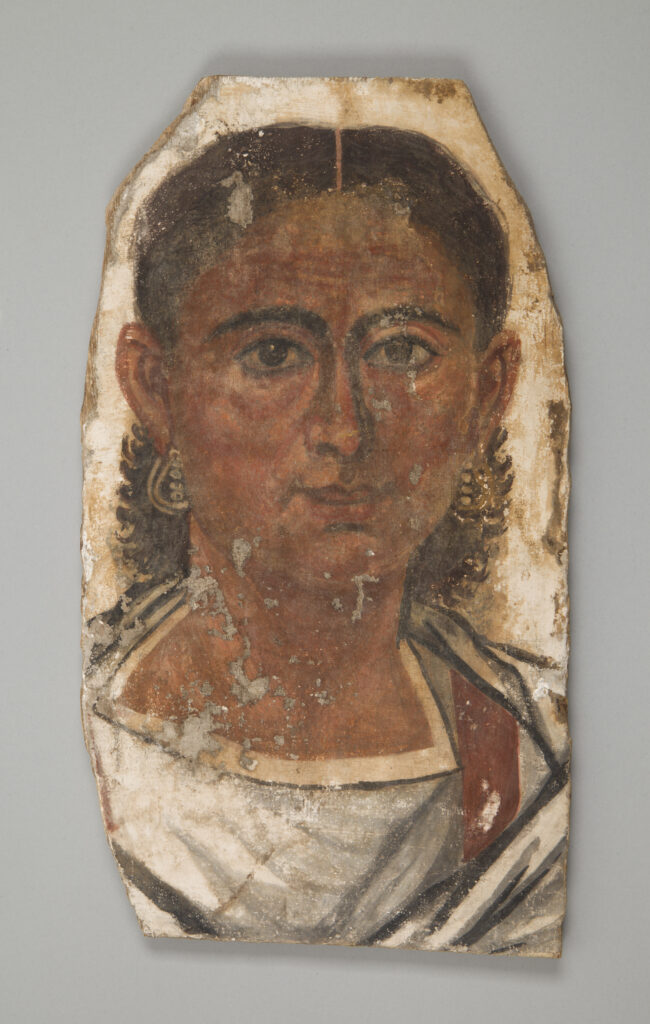
The term ‘Fayum portraits’ refers to the Fayum Oasis, where the first such finds were made. They were produced for the Romans who settled in Egypt following the conquest of the country by Octavian Augustus after his victory at the Battle of Actium in 31 BC. The Romans adopted the Egyptian religion and, in accordance with local custom, their bodies were mummified after death and a portrait painted on a board or canvas was placed over their faces. Both men and women in the portraits are dressed in linen or wool tunics with large necklines. Their clothing, hairstyles, and jewelry reflect the contemporary fashion prevailing in Rome itself and common throughout the Empire. Interest in Fayum portraits was sparked by an 1888 exhibition in Vienna, which showed several hundred encaustic and tempera portraits, purchased in Egypt by the merchant Theodor Graf.
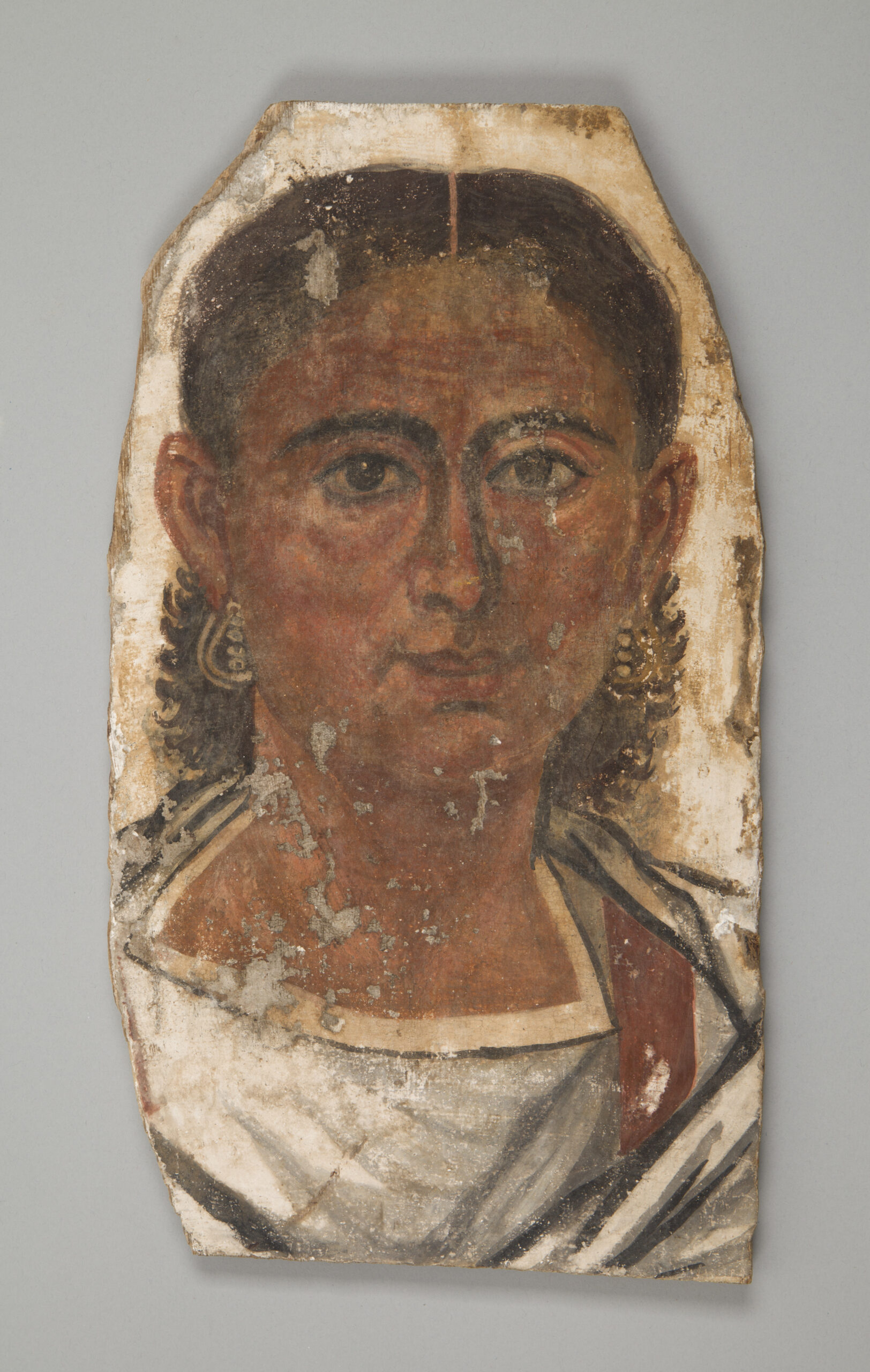
Shortly afterwards, in 1890, during a trip to Egypt, Prince Władysław Czartoryski acquired two mummy portraits. They are painted in tempera. The young woman is turned slightly to the left. Her full face is framed by hair combed smoothly behind her ears and falling in curls onto her shoulders. Her ears are adorned with arched earrings featuring four pearls. She is dressed in a white tunic with a red clavus, the trapezoidal neckline of which is edged with black trim. A grey cloak is draped over the tunic.
We invite you to explore the entry for this object in the digital catalogue of the National Museum in Kraków.
Author of the entry: Dorota Gorzelany
National Museum in Krakow / Princes Czartoryski Museum / Arsenal / Gallery of Ancient Art
The National Museum in Krakow
MNK XI-1022
CC0 – Public domain
 MNK Czartoryski Museum
ul. Pijarska 15, 31-015 Kraków