


 MNK Czartoryski Museum
ul. Pijarska 15, 31-015 Kraków
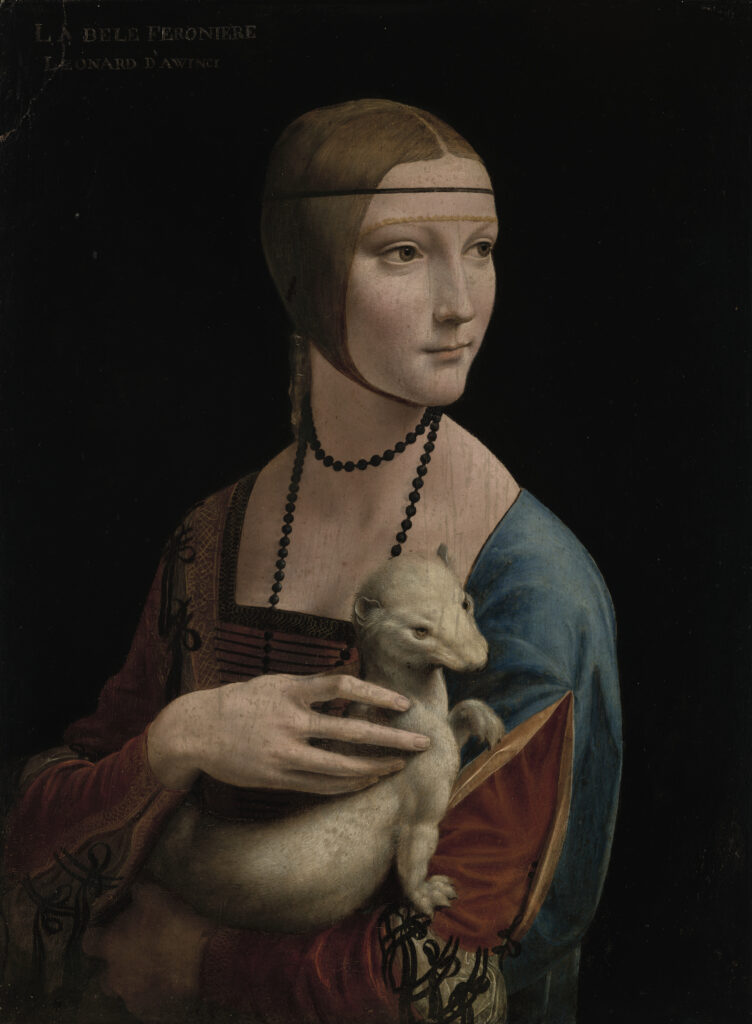
The subject of the painting is Cecilia Gallerani (c. 1473–1536), a lady-in-waiting and mistress of the Duke of Milan, Ludovico Sforza, known as il Moro or Ermellino Bianco (1452–1508). This is one of just over a dozen surviving portraits painted by Leonardo da Vinci and the only work by the artist in Polish collections.
The way Cecilia is depicted follows the Renaissance idea of painting as an illusion of nature. The plastic, lifelike image demonstrates knowledge of human anatomy and a masterful use of light, which brings the figure out from the background (the painting was repainted in the 19th century; in its original version, the background was modeled with light, creating the effect of the figure emerging from semi-darkness). She is portrayed as a young girl of sixteen or seventeen. Between 1489 and 1491, she was the duke’s mistress, and in 1491 she gave birth to his son, named Cesare. Since the duke was engaged to Princess Beatrice d’Este, whom he married in January 1491, Cecilia and her son were dismissed from court. She later married Count Bergamino and settled with him in the Carmagnola palace.
According to contemporary sources, Cecilia was noted not only for her beauty but also for her education and courtly refinement. She was called a muse and donna docta (a learned woman), and was compared to the eminent women of antiquity: Aspasia (Pericles’ wife), Axiothea (Plato’s student) and the poet Sappho.
Cecilia Gallerani was an accomplished poet herself, earning a reputation as the “light of the Italian language,” though her poetry has not survived.
According to scholars of Leonardo’s work, the animal depicted in the painting is an allusion to Duke Ludovico, who in 1488 received the Order of the Ermine from the King of Naples, gaining one of his nicknames: Ermellino Bianco (“white ermine”). Its presence may refer to the intimacy between Cecilia and the duke, as well as to the possibility that she was already pregnant with his child. In iconography, the ermine symbolizes purity and virginity; in Leonardo’s encoded message, it may also refer to Cecilia herself, as her surname resembles the Greek word for the animal (gale).
Leonardo’s masterpiece represents the crowning achievement of 15th-century portraiture. The three-quarter view of the sitter—rather than the profile view more commonly practiced until then—creates an impression of movement, a slight turn caused by her looking toward someone outside the frame. This gave the portrayed subject a vitality previously unseen in portrait painting. The consistent chiaroscuro modeling employed by the painter, using only a single light source (possibly artificial) falling on the sitter from above and to the right, granted the figure a suggestive sense of three-dimensionality.
The painting was purchased around 1800 in Italy by Adam Jerzy Czartoryski, son of Princess Izabela Czartoryska, and donated by him to the museum in Puławy, where from 1809 it was displayed in the Gothic House. From the beginning, the authorship of the work was known, but until around 1900 there was uncertainty about the sitter’s identity. Only at the end of the 19th century, thanks to archival research—including letters from Cecilia to Isabella d’Este and a sonnet by Bernardo Bellincioni (d. 1492)—was the identity of the portrayed lady confirmed.
We invite you to read more about this object in the digital collections catalog of the National Museum in Kraków.
Authors of the entry: Dorota Dec, Janusz Wałek
The Czartoryski Museum
The National Museum in Krakow
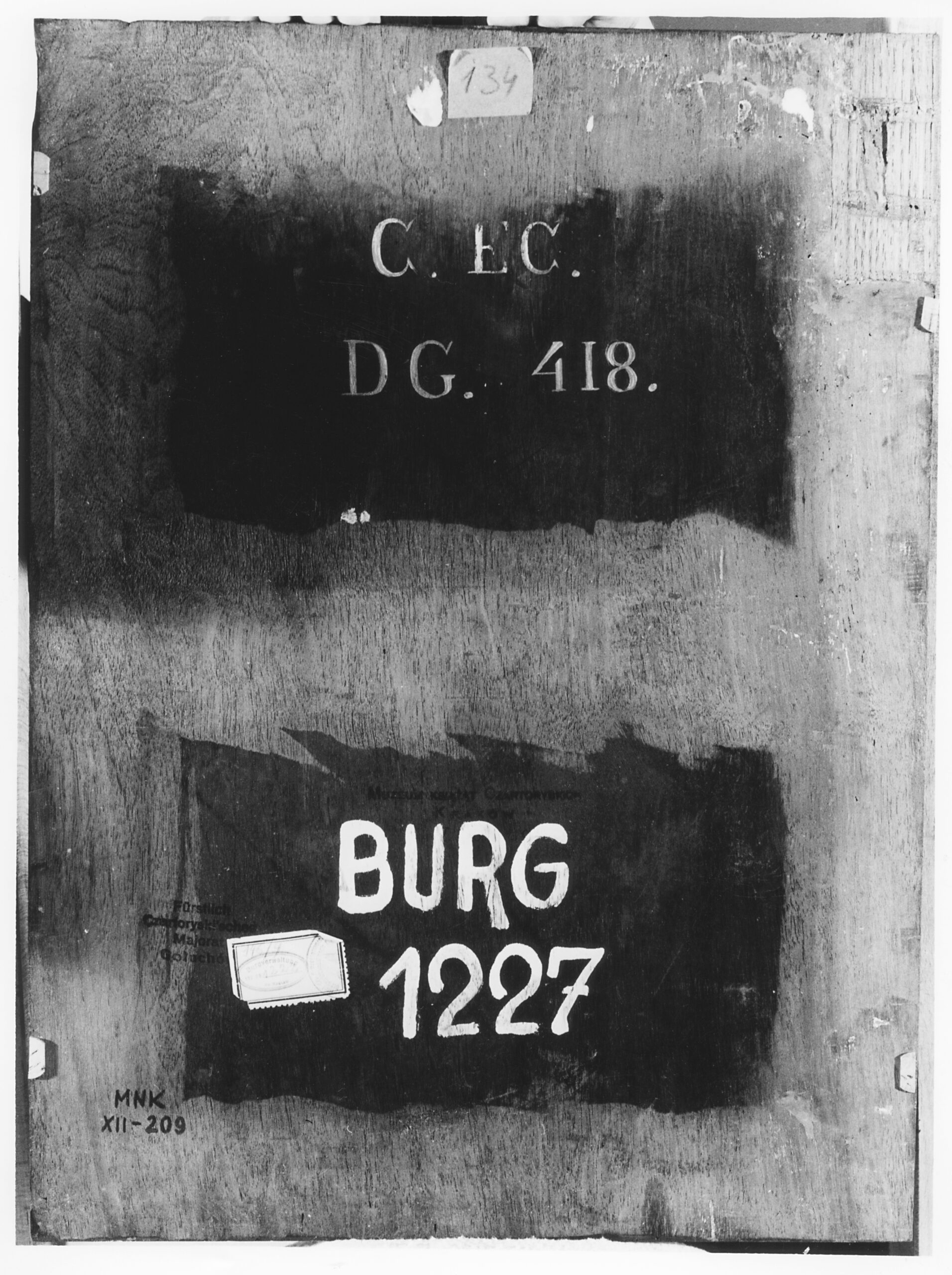
MNK XII-209
CC0 – Public domain
MNK Czartoryski Museum
ul. Pijarska 15, 31-015 Kraków