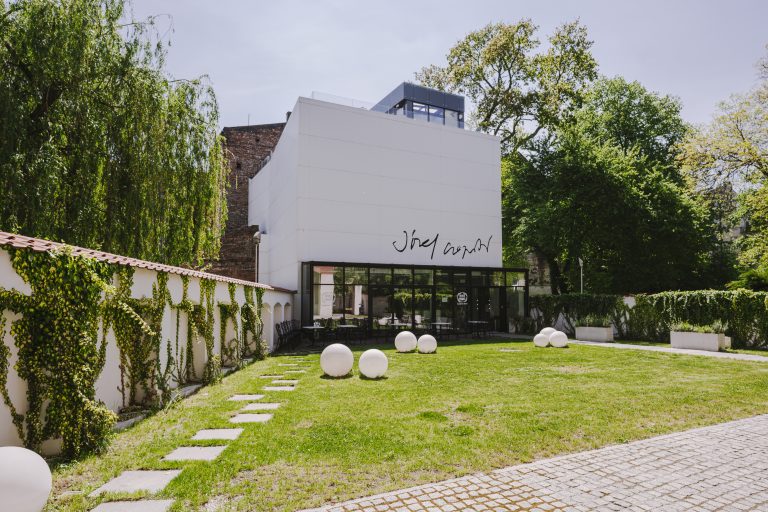
“Atma”, a venue associated with the composer Karol Szymanowski, a space steeped in music and regularly filled with its sounds, provides an excellent “backdrop” for magnificent paintings from the turn of the 19th
and 20th centuries, depicting the beautiful and highly evocative motif of At the Piano.
The paintings selected for the exhibition are dominated above all by an atmosphere of concentration and a mood of contemplation.
Nothing and no one disturbs the intimacy and harmony of those moments when the sound of the grand piano
(or upright piano) begins to resound. These extraordinary instruments delight not only with their elegant form, but with a whole range of symbolic meanings. They evoke a variety of emotions, passions and reminiscences; they create space for diverse interpretations; they embody class and culture; and they often evoke nostalgia.
The piano has come a long way, from a luxurious ‘piece of furniture’ for the aristocracy to middle-class homes,
becoming a ‘social instrument’ across many eras. To this day, the piano is seen as a symbol of social status and cultural standing. This “object”, often placed in the foreground of paintings, draws our attention, usually focusing it on the figure playing it, or even simply standing beside it.
The second section of the exhibition presents exceptionally original works in which we can see female figures lost in musical contemplation at the piano. Beginning with Stanisław Lentz’s remarkable salon painting At the Piano. In a dark, gloomy interior, in the foreground we see a woman dressed in white with her hands on the keyboard, gazing intently at the sheet music spread out on the instrument. Beside her sits a man, absorbed in the melody. A similar salon scene unfolds in the second painting, though with a brighter colour palette. This is Stanisław Dębicki’s work, Doctor Dwernicki with his Wife at the Piano.
The female figure, seated at the instrument, is also focused on the musical notation and the sounds of the music. The man sitting right beside her has his head bent over a book. Another female figure playing the piano is the daughter of the artist Włodzimierz Tetmajer – portrayed in the painting Old Song.
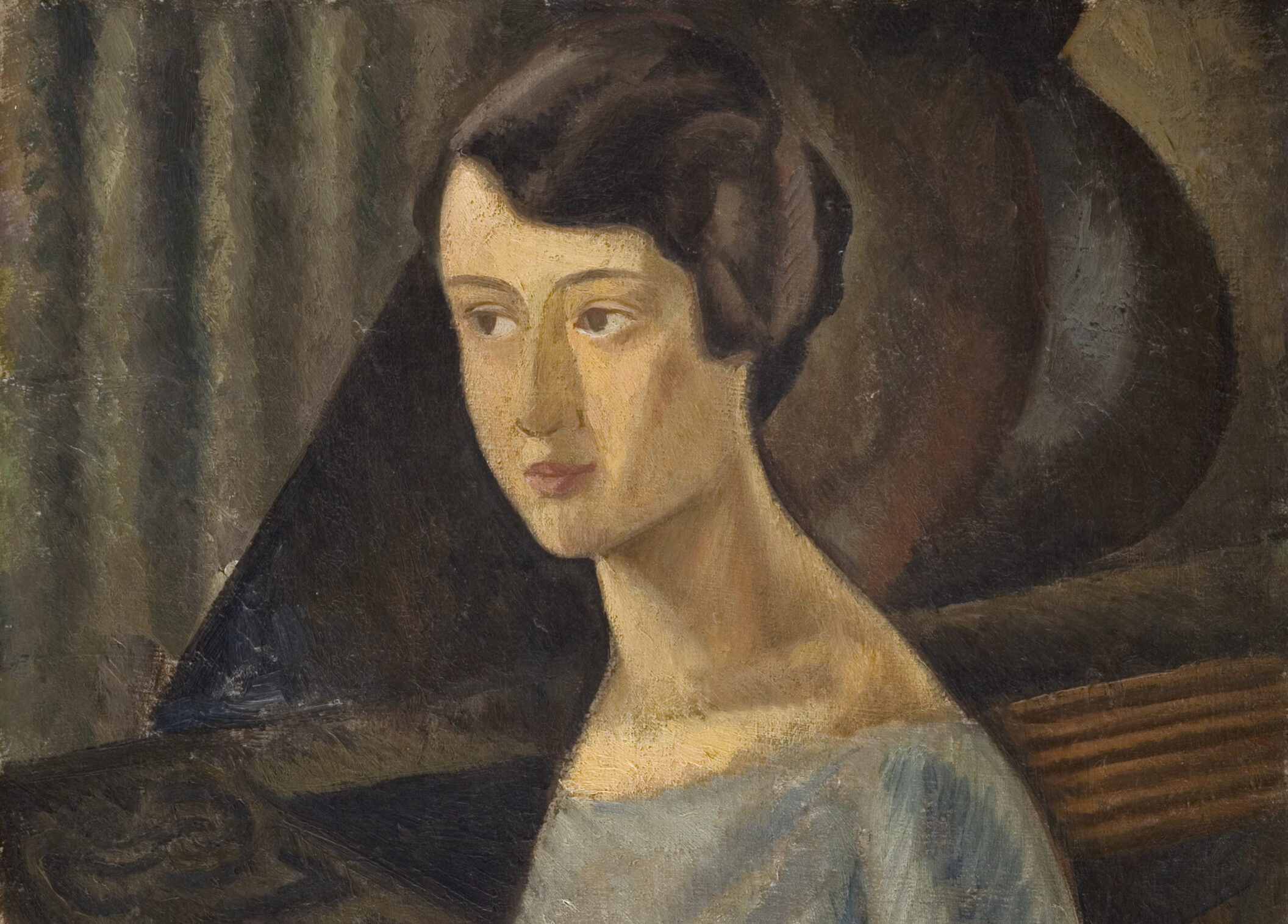
The dimly lit interior, illuminated only by a candle attached to the piano, seems to be filled with music. In contrast, Zbigniew Pronaszka’s Portrait of a Wife at the Piano depicts a woman who also stands at the piano, elegant and dignified, yet perfectly in harmony with the instrument.
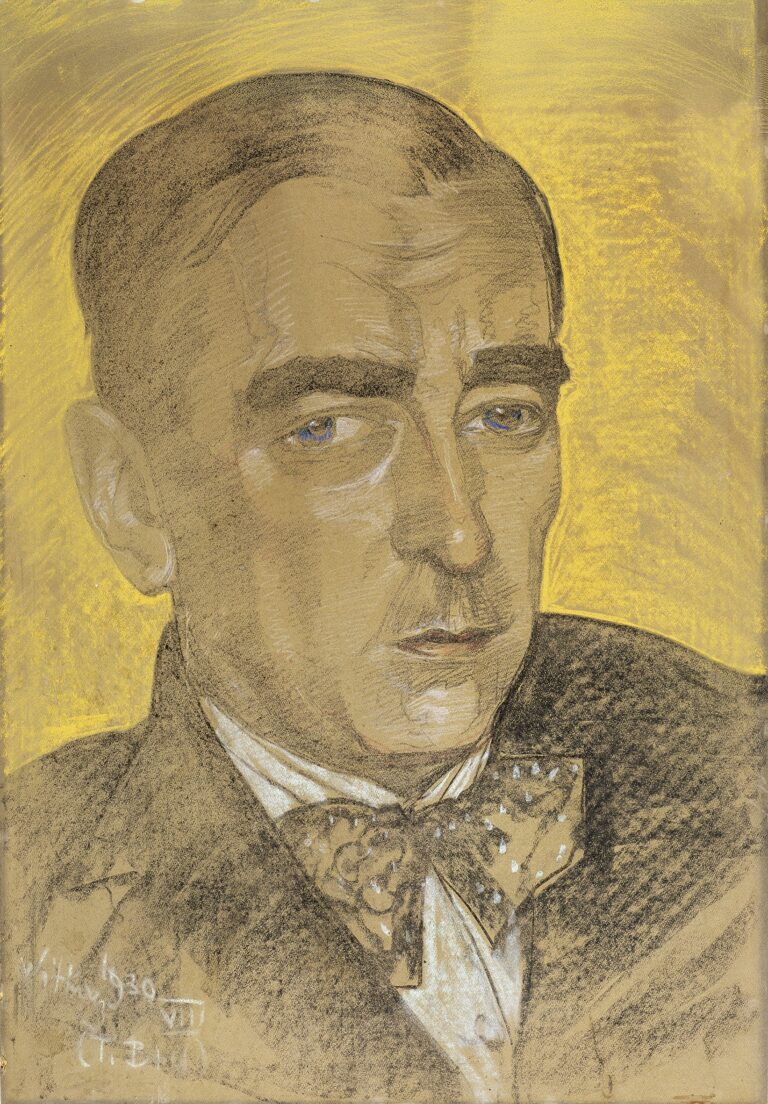
Furthermore, the exhibition has been enriched with works by contemporary artists. The portrait of the famous composer PE. Bronisław Schlabs, alluding to the figure of Krzysztof Penderecki, and Karol Pustelnik’s wonderfully resonant painting – Musical Composition, where keyboards are visible amidst swirling, scattered colours. Looking at these paintings, we can almost hear the music. We perceive it through colours and forms. The light, as well as the lightness and resonance, the rhythm of the shapes, visible in these works, ensure that no member of the audience has any doubt
that they are steeped in music. Together with the musicians playing the instrument, we lower our gaze to focus on the hands resting on the keyboard and wait for the first chords to fill our souls.
In this extraordinary villa, one can regularly hear the Schimmel concert grand piano being played. It is used during chamber concerts organised at the museum. On display in the composer’s study is an upright piano (it belonged to Dr Olgierd Sokołowski, a doctor from Zakopane who treated the musician), on which Karol Szymanowski played. From the moment he left his home village of Tymoszówka, the composer did not own his own instrument. He composed on rented pianos. At ‘Atma’, he initially worked on a Pertoff piano, leased from Franciszka Kulpińska, the owner of the Gerlach guesthouse on Krupówki Street.
The Gebrüder Stingl K. u. K. Hof Clavier-Fabrikanten piano was donated to the National Museum in Kraków by Dr Julia Sokołowska in 1975.
24.02.26 – 30.09.26
 MNK Szymanowski
ul. Kasprusie 19, 34-500, Zakopane