





 MNK Szołayscy
pl. Szczepański 9, 31-011 Kraków
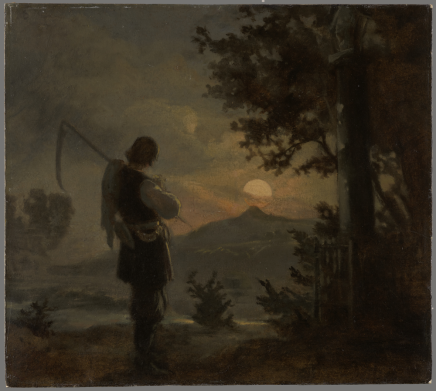
Born in Ludwinów near Krakow and living in Podgórze, Aleksander Kotsis was one of the most valued Polish painters working in the mid-19th century. His work is associated with artistic circles in Krakow, Vienna and Munich. Kotsis’s art represents the direction of 19th-century realism, and its analogies can be found in the works of the so-called painters of the people, e.g. Jean-François Millet (1814-1875). What is also worth-noting is the Romantic perception of the world.
Born in Ludwinów near Krakow and living in Podgórze, Aleksander Kotsis was one of the most valued Polish painters working in the mid-19th century. His work is associated with artistic circles in Krakow, Vienna and Munich. Kotsis’s art represents the direction of 19th-century realism, and its analogies can be found in the works of the so-called painters of the people, e.g. Jean-François Millet (1814-1875). What is also worth-noting is the Romantic perception of the world. Kotsis was inspired by the shades of everyday life in Galician towns and the villages of Lesser Poland and Podhale: human joys and afflictions, the tragedy of the existence of the poor and the excluded, the tenderness and transience of interpersonal relations and children’s curiosity about the world. The beauty of the landscape near Krakow and the Tatra Mountains further south was also an important source of the artist’s fascination.
The exhibition at the National Museum in Krakow has been prepared for the 185th anniversary of the artist’s birth. It presents oil paintings, watercolours, drawings and sketches from private collections and from museum collections, including the National Museums in Gdańsk, Kielce, Krakow, Poznań, Szczecin, Warsaw and Wrocław, the Silesian Museum in Katowice, the Muzeum Sztuki in Łódź and the Borys Voznytsky Lviv Art Gallery.
The thematic and problematic arrangement of the exhibition was inspired by the thought of Jan Cybis (1897-1972): “Kotsis’s painting intrigues us because it was painted for artistic reasons at the time when artistic reasons tended to be lost, as artists focussed on the theme”. The main part of the exhibition is supplemented by four annexes. Kotsis’s ʺArtistic Code” provides an insight into the painter’s secret techniques and technology. The next, In Kotsis Sought, will give you an insight into the history of his missing works. The village as an inspiration presents examples of works reflecting Kotsis’s fascination with the village and its people that many native artists active in the mid-19th century shared with him. The exhibition’s closing annex, Kotsis and Socialist Realists, refers to the reception of the artist’s art in the 1940s and 1950s, showing it through the prism of the top-down, politicized direction of socialist realism which was imposed from above.
Exhibition curator: dr Aleksandra Krypczyk-De Barra
Exhibition Coordinator: Katarzyna Szepieniec
Exhibition Designers: Jan Strumiłło, Julia Jankowska
MNK Szołayscy
pl. Szczepański 9, 31-011 Kraków